
Baking Products, Chocolate
The differences between compound and couverture chocolate

Jul
—
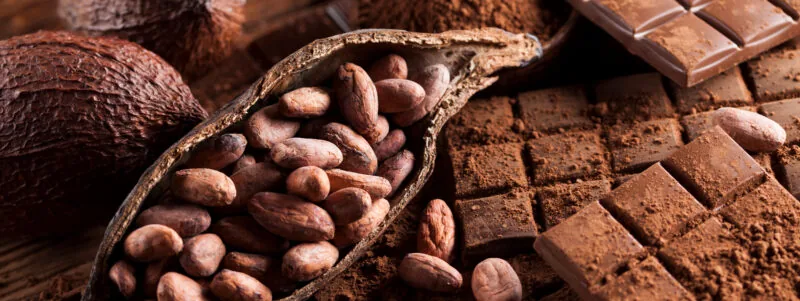
You have heard the term “couverture” when you’re buying quality chocolate from Veliche, Belcolade, Callebaut, or Lindt. By definition, couverture chocolate is chocolate that contains as few additional filler ingredients as possible, aside from the cacao pod itself. On average, they contain 4-5 ingredients. Couverture must be tempered to achieve that glossy coat and crisp snap, but it’s best appreciated the less it’s been altered. The flavours are complex, rich, and ideal for pastry, chocolate bonbons, and entremet desserts. Each brand of couverture will present different tasting notes, viscosity, and qualities.
Couverture is an unspoken standard for chocolate; it will never be labeled on the bag as “couverture”. Another branch of the chocolate tree, Compound Chocolate, would have to be listed on the packaging because it is not considered couverture. That doesn’t mean all couverture chocolate is perfect for every use; however, they differ in fluidity and cocoa percentages. Couverture just means that a certain amount of cacao beans is within each chocolate product.
The building blocks of couverture
What makes a couverture chocolate is the ingredients, or rather, the lack of ingredients. A compound chocolate, for example, would have a lower amount of cocoa butter, or for some confectionery chocolate, none at all. The cocoa butter would then be replaced with palm kernel oil. A chocolate is considered couverture depends on the variety amount of cocoa solids.
In Canada, the regulations for chocolate are:
Dark chocolate is considered couverture only if:
- It has at least 35% total cocoa solids, of which
- At least 18% cocoa butter
- At least 14% fat-free cocoa solids
Milk chocolate is considered couverture only if:
- At least 25% total cocoa solids, of which they must contain:
- At least 15% cocoa butter
- At least 2.5% fat-free cocoa solids
- 12% total milk solids, and
- 3.39% milk fat
White Chocolate is considered couverture only if:
- It has at least 20% cocoa butter
- At least 14% total milk solids from milk ingredients
- In that total, it must have at least 3.5% milk fat
All of these qualifications are from the Canada Food Compositional Standards (CFCS), section 4.1: Cocoa and Chocolate Products. CFCS dictates how food may be labeled, advertised, and distributed in Canada as a whole. Every country is different; for example, in the United States, the FDA considers milk chocolate couverture to contain only 10% cocoa butter.
What is a compound chocolate?
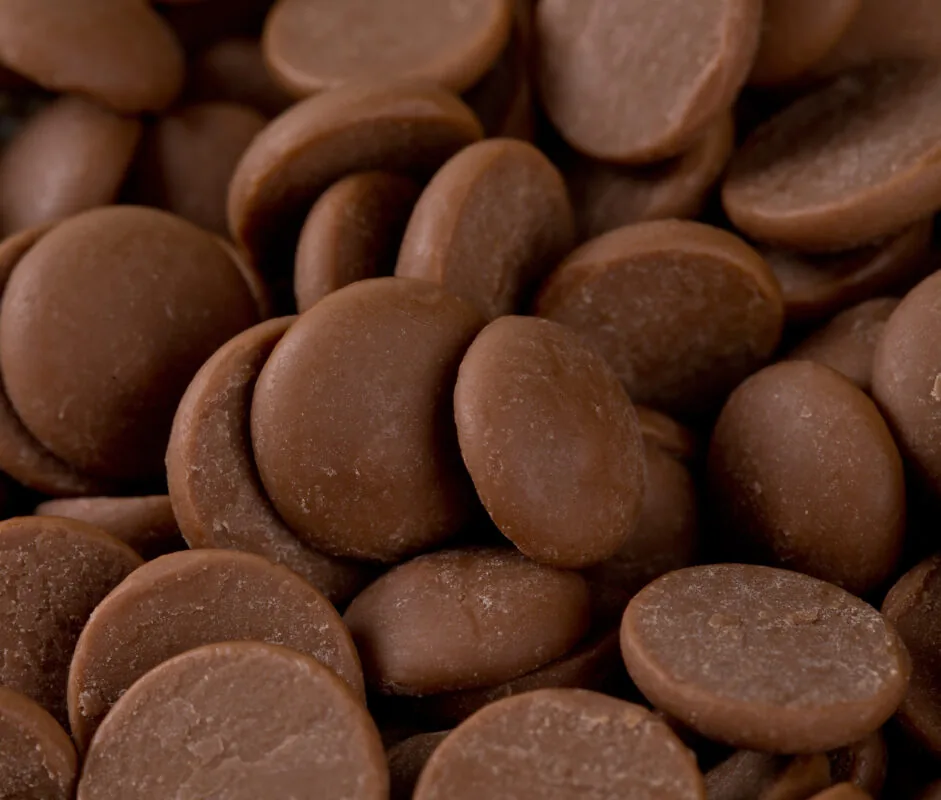
Compound chocolate is a strange category of confectionery ingredient. You may have seen it under other names such as candy melts or chocolate-flavored wafers. By definition, compound chocolate is chocolate that cannot be considered couverture because it is short on total cocoa mass. In some countries, such as in France, it’s not even considered chocolate but a candy compound. In other regions, according to Puratos, compound chocolate is a confection made from cocoa powder and vegetable oils. It can lack cocoa mass and typically does, unlike couverture chocolate, which must contain some percentage of cocoa mass.
Just because it lacks the unique flavors of couverture doesn’t mean it’s all bad. Compared to couverture, it’s significantly easier to use. It doesn’t require any tempering to use, so it will set at room temperature without any blooming. Compound chocolate also tends to be more forgiving than couverture, and it can be thinned by adding a fat such as coconut oil or vegetable oil. Compound chocolate is typically used when its state has been altered, such as when it’s not the main star of the show. It’s also a good, beginner-friendly chocolate, and it’s more affordable than couverture. Compound chocolate is ideal for cakepops, dipped treats such as pretzels, chocolate dipped strawberries and quick drizzles. Compound chocolate is perfect for chocolate garnishes when time is of the essence.
Why do you need to temper couverture chocolate?
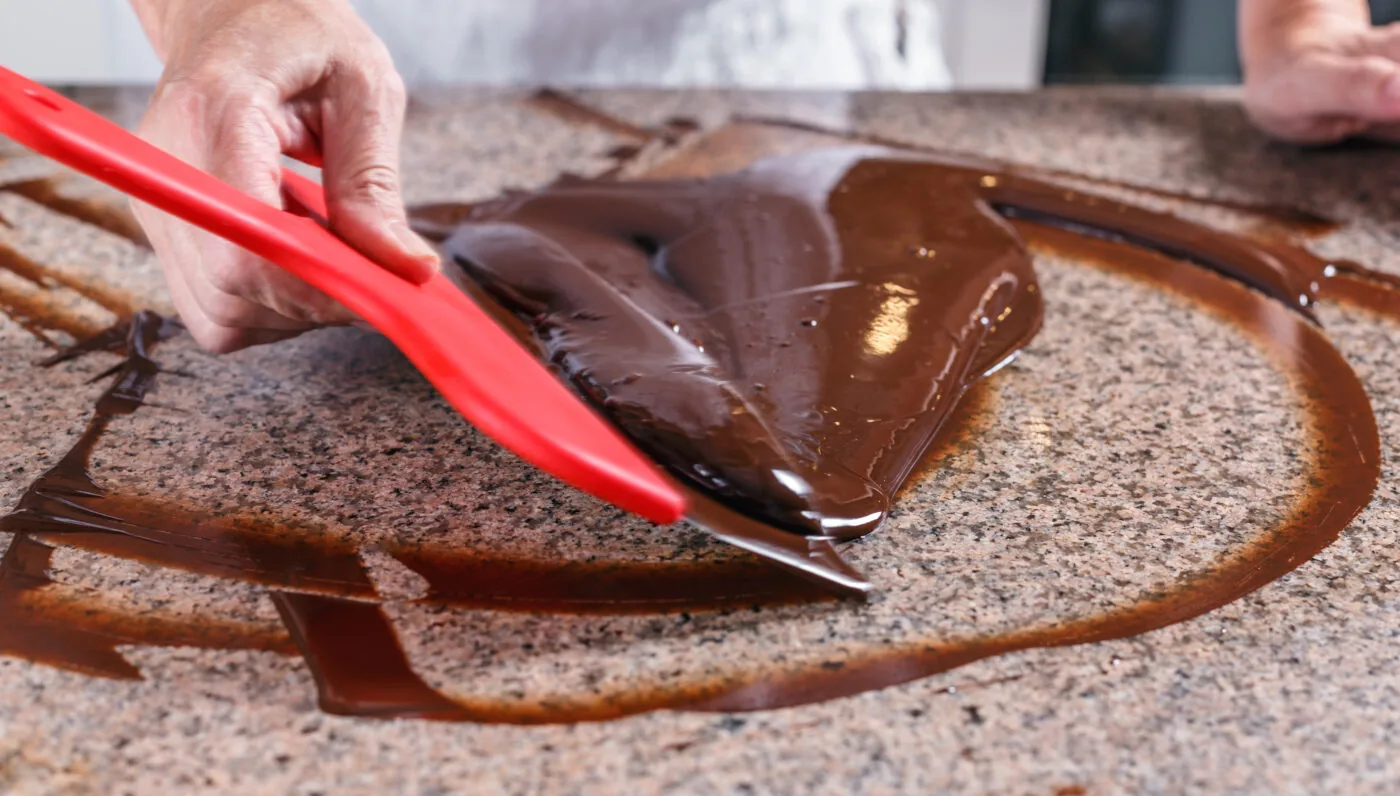
Tempering chocolate is not an optional step when it comes to couverture chocolate. The tempering process allows the chocolate to harden at room temperature and hold its shape. To summarize what tempering is, it’s a process of making the chocolate crystallize in a certain way. Untempered chocolate is duller, crumbles easily, and the fat/sugar blooms become more obvious. Compound chocolate, meanwhile, does not require tempering in order to harden.
This can be done in a multitude of ways, from beginner-friendly methods to the methods professionals use. If you’d like to learn more about tempering, check out this guide from Callebaut for a more in-depth guide on chocolate tempering
How do you decide which chocolate to use?
Every couverture is different, and each one has a task they excel at. You might’ve seen the fluidity on a bag of Veliche, Callebaut, or Belcolade. This basically means how thick the end product would be once it’s melted down into a liquid. Fluidity is typically represented by droplets, typically ranging from one to five. A one-out-of-five fluidity chocolate would still be thicker even when it’s melted down, compared to a three-out-of-five fluidity couverture chocolate. Fluidity is determined by the amount of cocoa butter in the chocolate; a higher cocoa butter percentage indicates greater fluidity. To put it simply: higher fluidity is better for a thinner, crunchier shell on bonbons, while a thicker fluidity is better for sculpting, ganache and infusing.
Here’s a list of what each fluidity is best for:
One out of five drops fluidity according to Callebaut:
- Infusions:
- Fillings, buttercream, ice cream, batters
Two out of five drop fluidity:
- Sculpting
- Large figures, displays
Three out of five drop fluidity:
- The all-rounder option
- It’s a good option for essentially everything
- The most versatile option
Four out of five drop fluidity:
- Best option for enrobing if a thin shell is desired
- Works best with covering bonbons in a thin, crunchy shell or filling molds with sharp angles
Five out of five drop fluidity:
- Best for dipping
- Great to use to make a thin coating on biscuits or other baked goods with a large surface area
Alternatively, compound chocolate is a jack-of-all-trades. It’s much more forgiving to use compared to couverture.
In conclusion
Chocolate is a highly versatile ingredient, with options for beginners to professionals. Almost all of these products are available, from compound to couverture. Please let us know what you think about chocolate and what you’d like to see next.